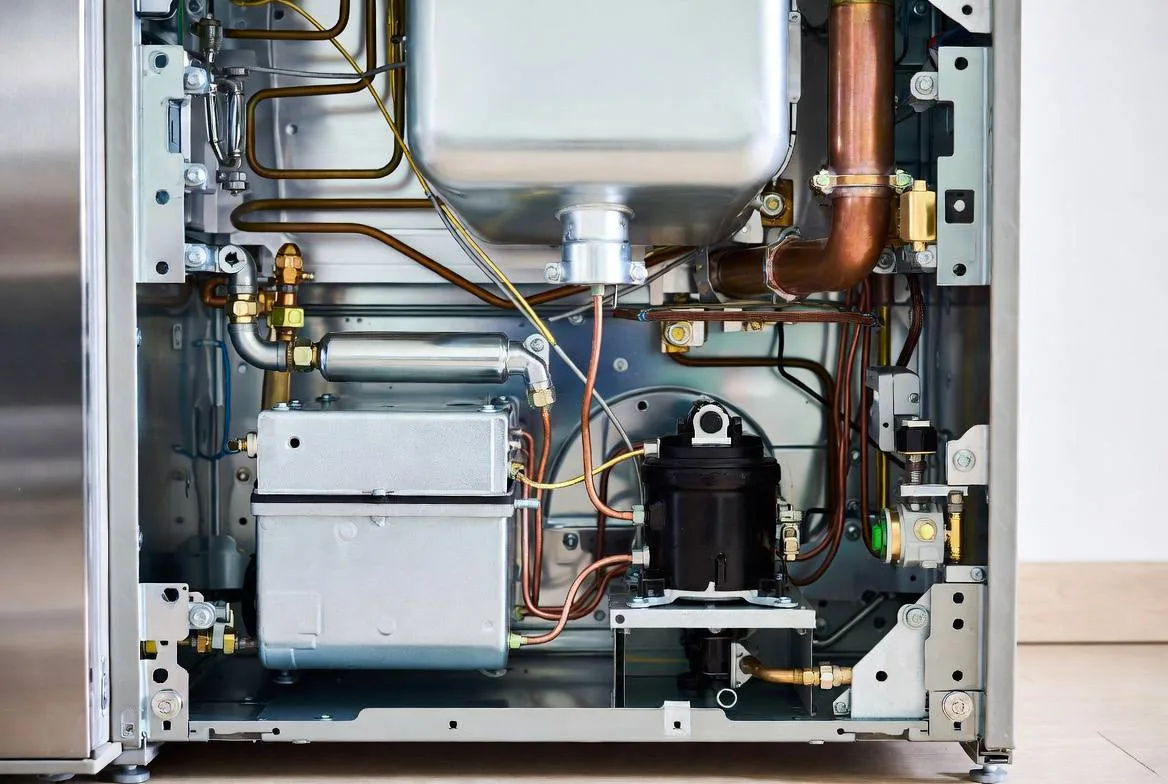
Your LG refrigerator suddenly stops cooling. The food in the fridge compartment is warm. You hear the compressor running constantly—or worse, not running at all. Before you panic, you need to know one critical fact: compressor replacement could cost you anywhere from $0 to $1,800, and the difference depends entirely on which repair pathway you choose.
The thing most LG owners don’t know: the linear compressor carries a 10-year warranty of its own, separate from and much longer than the one-year warranty on the rest of the refrigerator. If your unit is inside that window, the compressor itself is a warranty part and you should not be paying full price for it. That is the single biggest lever on your final bill, and it is still open.
A note on the class action, because it comes up first in every search. LG did settle a class action over these compressors, and you will find pages telling you to file a claim at lgfridgesettlement.com. That claims period is closed — the deadline for the US settlement passed in February 2021, and it only ever covered refrigerators manufactured between January 2014 and December 2017. Anyone telling you in 2026 to go file for a free replacement is working from a five-year-old page. The warranty below is the thing that actually still works.
This guide covers what the 10-year warranty does and does not pay for, what the repair really costs when you are outside it, and the point at which replacing beats repairing.
What’s Causing This Problem
LG refrigerator compressor failures aren’t random bad luck—they’re part of a documented defect affecting thousands of units. Understanding what’s actually broken (and why) is the first step to getting the right repair at the right price.
Linear Compressor Failures (Most Common)
The primary culprit is LG’s linear compressor technology, used in French Door, Side-by-Side, and Bottom Freezer models from 2016 onwards. Unlike traditional reciprocating compressors that use pistons, linear compressors use electromagnetic technology with fewer moving parts—theoretically more efficient and quieter. In practice, LG’s linear compressors have failed prematurely in high volumes, sometimes within 5 years of purchase despite refrigerators being marketed with 20-year lifespans.
Affected models include the LFX, LFXS, LMXS, LSXS, LUPXC, and LRFXC series. A prefix match is a reason to check your warranty status, not proof of anything — coverage is decided by your full model and serial number, not the first four letters.
Common Symptoms of Compressor Failure:
- No cooling — Fridge and freezer stay at room temperature despite the compressor running (or not running)
- Continuous running — Compressor cycles constantly without shutting off; condenser coils feel abnormally hot
- Strange noises — Buzzing, grinding, or rattling sounds coming from the compressor area
- Warm condenser coils — Abnormally hot tubing on the back or bottom of the unit
- Tripped circuit breaker — Compressor draws excessive current and trips your home’s electrical panel
- Complete shutdown — Compressor refuses to start despite thermostat being set to normal temperatures
Why Failures Happen Early
The litigation over these compressors documented a design that fails from the inside — the electrical winding and the internal bearing surfaces degrade faster than the design life. That matters to you for one practical reason: the failure is not something you caused. It is not maintenance you skipped, not the coils you never cleaned, and not a power surge. Compressors on these units fail on their own schedule, and LG’s response to that was to extend the warranty on the part rather than to recall anything.
Other Sealed System Issues to Rule Out
Sometimes a cooling failure isn’t just the compressor. The sealed system includes the compressor, condenser, evaporator, and dryer. Before committing to a $399–$1,800 repair, a professional diagnosis is critical. For a broader walkthrough of refrigerator cooling issues by symptom, see our refrigerator not cooling troubleshooting guide. Additional issues might include:
- Refrigerant leaks — Compressor runs but no cooling occurs
- Condenser blockage — Dirty coils reduce heat transfer efficiency
- Dryer failure — Moisture in refrigerant damages compressor components
- Evaporator frost buildup — Blocks airflow; compressor works but fridge stays warm
This is why professional diagnosis (covered later) matters so much—a $99 diagnostic fee now saves you from paying for the wrong repair.
Tools and Parts You’ll Need
Here’s the critical truth: compressor replacement is not a DIY repair. The sealed refrigeration system requires EPA certification, specialized recovery equipment, and precise vacuum/charging procedures. If you attempt this yourself, you’ll violate EPA regulations, void your warranty, potentially contaminate the environment with refrigerant, and likely damage your refrigerator beyond repair.
Professional Repair Only
- LG Authorized Service Technician — Your only option for warranty-covered repairs
- EPA-Certified HVAC/Refrigeration Tech — Required for private repairs if you’re outside warranty
- Specialized Equipment Required — Refrigerant recovery machine, vacuum pump, digital scale, manifold gauge set (costs $1,500+ to own; professionals have these)
Parts Involved (for reference only—don’t attempt installation):
If a technician quotes you additional parts beyond the compressor, here’s what they mean:
| Part | Purpose | Typical Cost (Parts Only) |
|---|---|---|
| Linear Compressor | The sealed motor that circulates refrigerant | $200–$350 |
| Drier/Filter | Removes moisture from refrigerant; often replaced during compressor repair | $50–$100 |
| Capacitor | Electrical component that helps start compressor | $30–$60 |
| Overload Protector | Prevents compressor from drawing excessive current | $20–$40 |
| Refrigerant (R-600a) | The cooling fluid; measured in ounces | $15–$25/oz |
| Gaskets & Seals | Prevent leaks at connection points | $10–$30 |
Why You Shouldn’t Buy Parts Yourself
Even if these parts were available for purchase (many aren’t sold to consumers), installation requires:
- Removing refrigerant from the system (EPA violation without certification)
- Vacuum-pulling the system to remove air and moisture
- Precisely charging with correct refrigerant amount (measured to the ounce)
- Pressure-testing the sealed system for leaks
- EPA record-keeping and documentation
A single mistake costs you a ruined compressor, a contaminated system, or worse. Always use a certified technician.
Step-by-Step Fix
Since professional repair is mandatory, here’s what to expect from the technician’s process. Understanding the steps helps you verify that you’re being charged fairly and that the work is done correctly.
Step 1: Professional Diagnosis ($0–$99)
Call an LG Authorized Service Center or EPA-certified HVAC technician and schedule a diagnostic appointment. They’ll:
- Check compressor voltage and amperage draw
- Measure refrigerant pressure on both high and low sides
- Listen for abnormal compressor sounds
- Inspect condenser and evaporator coils for blockages
- Test thermostat and control board function
- Document findings in writing
Cost: LG Authorized technicians often waive the diagnostic fee if you proceed with repair through them. Private technicians charge $75–$150. Don’t skip this step—it confirms whether compressor replacement is actually needed.
Step 2: Check Your Compressor Warranty Before You Pay Anyone (Free, 15 minutes)
This is the step that decides your bill, and almost nobody does it first.
- Get your model and serial number from the sticker inside the fresh food compartment — usually on the left wall near the crisper drawers, sometimes behind the top drawer.
- Find proof of purchase if you have it. A receipt, a credit card statement, or a delivery confirmation all work. If you have none, LG can often date the unit from the serial number, so call anyway.
- Call LG at 1-800-243-0000 and ask two specific questions: is my compressor still inside the 10-year warranty, and does that coverage include labor or parts only?
Ask both, because the answer changes what you owe by several hundred dollars. LG’s standard structure on these units is one year on the whole refrigerator, five years on the sealed system, and ten years on the linear compressor part. After the settlement, LG extended parts-and-labor coverage on the compressor to the full ten years for a range of units manufactured roughly 2014 through 2022 — but which terms apply to your unit depends on the model and the build date, so make LG tell you rather than assuming from an article.
What “parts only” actually means. If your compressor is covered but the labor is not, LG ships the part and you pay a technician to install it. That is not a small remainder — the labor on a French door sealed system repair typically runs several hundred dollars, plus refrigerant recovery and recharge on top. It is still far better than buying the compressor outright, but it is not free, and people are regularly surprised by this.
Step 3: Choose Your Repair Option
Option A: LG Authorized Service Under Warranty
- The right route if step 2 says you have coverage. Book through LG so the warranty is honored.
- Confirm before the visit what you will owe: labor, refrigerant, diagnostic, or nothing.
- Ask whether the repair itself carries a warranty and get it in writing.
- If LG quotes you a flat rate for an out-of-warranty sealed system repair, take the number from them directly — these programs come and go, and any figure you read online is likely stale.
Option B: Private Authorized Repair ($1,200–$1,800)
- Get 2–3 written estimates from local EPA-certified HVAC technicians
- Compare total cost (compressor + drier + labor + refrigerant + diagnostics)
- Ask if they warranty the work (most offer 1–3 years on parts/labor)
- Verify they’ll provide a warranty certificate for your records
Option C: Depot Repair ($1,500–$2,000+)
- Use only if in-home repair isn’t available or if your unit is too old to warranty
- Technician removes fridge; transports to repair facility
- Adds transportation costs ($75–$200 each way)
Step 4: Schedule Repair
Once you’ve chosen your option, schedule the appointment:
- For warranty repairs: Book through LG at 1-800-243-0000 or online, and have your model, serial and purchase date in hand
- For private repair: Confirm appointment date, time window, and whether in-home or depot repair
Step 5: Prepare for Technician Arrival
- Clear access to the refrigerator (move it away from walls if necessary)
- Turn off the ice maker 24 hours before appointment (prevents water line issues)
- Have proof of purchase and model number ready
- Plan for 2–4 hours for in-home repair
- Keep food in coolers during repair (refrigerator will be without power)
Step 6: Post-Repair Verification
After the technician leaves:
- Request a written receipt detailing what was replaced
- Ask for a warranty certificate covering the compressor (should be 90 days minimum)
- Test that the fridge cools within 2 hours; freezer should reach 0°F within 4 hours
- Verify the compressor isn’t continuously running (should cycle on/off every 20–30 minutes)
- Get contact information for the technician in case issues arise
Alternative Fixes / Brand Variations
Not all refrigerator brands handle compressor failures the same way. If you’re comparing repair costs across brands, here’s what you need to know.
LG’s Approach (Your Current Problem)
LG’s 10-year compressor warranty exists because of the linear compressor problem, and it is genuinely longer than what the other brands publish. That is the odd upside of owning the unit with the known defect: the part most likely to fail is also the part with the longest coverage. It is worth being clear-eyed that this is a warranty, not a remedy — it replaces the compressor with another compressor of the same design.
Samsung Refrigerators
Samsung uses similar compressor technology but hasn’t faced the same widespread failure litigation. Compressor replacement through Samsung typically costs:
- In-warranty: Free (if within 1–5 years depending on model)
- Out-of-warranty: $1,200–$1,600 through Samsung Authorized Service
- Private repair: $1,200–$1,500
Samsung’s compressor coverage is shorter than LG’s, so out of warranty you are paying the full amount rather than the labor remainder.
Whirlpool/Maytag Refrigerators
Whirlpool-brand refrigerators (including Maytag and KitchenAid) use different compressor designs and have fewer documented failures. Costs:
- In-warranty: Free (1–5 years)
- Out-of-warranty: $1,000–$1,400 (often cheaper than LG private repair due to simpler compressor design)
- Private repair: $900–$1,300
Whirlpool has not faced major compressor litigation, so you get standard warranty coverage only — no extended compressor term to fall back on.
GE Refrigerators
GE’s compressor failure rates are lower than LG’s. Replacement costs:
- In-warranty: Free
- Out-of-warranty: $1,100–$1,500
- Private repair: $1,000–$1,400
No flat-rate program; standard warranty coverage applies.
The LG Advantage
If your LG is still inside the 10-year compressor window, you have an advantage no Samsung, Whirlpool or GE owner has: the most expensive single part in the refrigerator is a warranty part. Whether that means a free repair or a labor-only bill depends on which coverage terms apply to your build, which is exactly why the phone call in step 2 comes before the quote.
What If It’s Not the Compressor?
If diagnosis reveals the issue is the condenser (blocked coils), evaporator (frosted over), or control board (electrical malfunction), costs differ:
- Condenser cleaning: $150–$300 (sometimes free if caused by manufacturing defect)
- Evaporator defrost system repair: $200–$500
- Control board replacement: $300–$600
- Thermostat/sensor replacement: $100–$250
Always get the specific diagnosis in writing before agreeing to any repair beyond the compressor.
How to Prevent This Problem
Once your compressor is repaired or replaced, you want to avoid the same failure down the road. While you can’t prevent a manufacturing defect, proper maintenance dramatically extends compressor life and prevents secondary failures.
Regular Maintenance (Every 6 Months)
Clean the Condenser Coils
- Locate the condenser coils (usually on the back or underneath the fridge)
- Unplug the refrigerator
- Use a soft brush or vacuum (soft brush attachment) to remove dust and debris
- Dirty coils force the compressor to work harder and run longer, shortening its life
- Clean coils reduce compressor runtime by 15–25%, extending lifespan significantly
Check and Clean the Door Seals
- Inspect rubber gaskets for cracks, tears, or loose sections
- Wipe with warm soapy water to remove debris
- A leaking door seal forces the compressor to run constantly to maintain temperature
- Replace seals if damage is visible ($75–$150 for parts + labor)
Verify Proper Temperature Settings
- Fridge should be 35–38°F; freezer should be 0°F or below
- Use an inexpensive thermometer (under $10) to verify actual temperatures monthly
- Running too cold strains the compressor unnecessarily
- Running too warm can mask early cooling issues
Ensure Proper Airflow
- Keep at least 2 inches of space on all sides of the refrigerator
- Don’t block air vents inside the fridge with food or containers
- Restricted airflow causes uneven cooling, which increases compressor strain
- Keep the area around the unit clear of dust and debris
Check Ice Maker and Water Line
- Ice makers pull additional power from the refrigerator’s electrical system
- Turn off the ice maker if you don’t use it regularly
- Inspect water lines quarterly for leaks
- A slow water leak can damage the control board and compressor over time
Don’t Overload the Unit
- Excessively full refrigerators block airflow
- Leave at least 25% of the interior empty space
- Organize food to allow air circulation around items
- Overloading increases compressor runtime and heat generation
Schedule Annual Professional Maintenance
- If your refrigerator is over 10 years old, consider an annual inspection
- A technician can check refrigerant levels, pressure, and electrical connections
- Early detection of worn components ($200 inspection) can prevent a $1,500+ compressor failure
- Document all maintenance in writing for warranty purposes
Keep Documentation
- Save all maintenance records, repair receipts, and warranty certificates
- If the compressor fails again within warranty, you’ll have proof that proper maintenance was followed
- A dated proof of purchase is what turns “probably still covered” into a warranty claim, so keep it somewhere you can find it in ten years
Repair vs Replace / When to Call a Pro
This is the decision that keeps refrigerator owners up at night: Should I spend $399–$1,800 to repair the compressor, or is it time to buy a new refrigerator?
The Cost Comparison
| Repair Option | Total Cost | Warranty | Payback Timeline |
|---|---|---|---|
| Settlement Coverage | $0 | 10 years (parts) | Immediate; essentially free |
| LG Flat-Rate Repair | $399 | 90 days (parts/labor) | Break-even at ~2 months of electricity savings |
| Private Repair (Average) | $1,400 | 1–3 years (parts/labor) | Break-even at ~12 months |
| New Mid-Range Refrigerator | $2,000–$3,500 | 1–5 years | Never breaks even vs. repair |
| New Premium Refrigerator | $4,000–$8,000+ | 1–5 years | Expensive additional cost |
When Repair Makes Sense
Repair is almost always the right choice when:
- The compressor is still under warranty: Whether you end up owing nothing or owing the labor, no new refrigerator competes with a covered compressor. Make the call before you get a quote.
- The refrigerator is under 10 years old: A well-maintained LG refrigerator should last 15–20 years. If you’re at year 6–7, a $400–$1,400 repair extends life by 8–13 more years — compelling value.
- You own a French Door or Bottom Freezer model you love: The tub/ice maker configurations are convenient. Replacing with equivalent functionality costs $2,000–$4,000+.
When Replacement Makes Sense
Consider replacement if:
- The refrigerator is 12+ years old and past the compressor warranty: At this age, other sealed system components may fail soon. Paying $1,400 for a compressor on a 12-year-old unit risks another $800 failure in 18 months.
- Private repair quote exceeds $1,500: For quotes in the $1,500–$1,800 range, the 12-month break-even timeline approaches the point where a newer, more efficient unit starts making financial sense.
- Multiple other components have already failed: If you’ve replaced the ice maker, control board, and water valve in the past 3 years, the refrigerator may be entering a cascade failure pattern.
- You want a significant upgrade: If you’re replacing a base model and want French Door with internal water/ice, the cost difference between repair and upgrade narrows considerably.
The Rule of Thumb
Use the 50% rule: if the repair cost exceeds 50% of the replacement cost of a comparable new unit, consider replacing. A warranty repair, even one where you cover the labor, sits far under that line for any refrigerator worth keeping. A full-price private repair at $1,400–$1,800 is where you have to run the math on your specific model.
When to Call a Professional
Always call a professional for:
- Any compressor work (EPA certification required)
- Sealed system diagnosis
- Refrigerant recovery and recharging
- In-warranty repairs (unauthorized repairs void warranty)
For Edmond and OKC area residents, our technicians are EPA-certified and familiar with LG’s linear compressor issues. We can diagnose your unit, tell you straight whether the compressor is the actual fault, and perform the repair if needed. Call 405-730-9131 to schedule.
Bottom Line: Know Your Options Before You Pay
LG refrigerator compressor replacement costs range from $0 to $1,800 — and the spread is almost entirely determined by which repair pathway you take.
Your priority order:
- Confirm it is actually the compressor — a professional diagnosis, before any parts conversation
- Call LG with your model and serial and ask whether the compressor is inside its 10-year warranty, and whether that includes labor
- If you are outside it, get 2–3 written quotes from EPA-certified private technicians
- Apply the 50% rule: if private repair exceeds 50% of new refrigerator cost, evaluate replacement
And ignore the pages still telling you to file a settlement claim. That window shut in February 2021.
Don’t pay $1,500 for a repair without first checking if you qualify for $0 or $399. Most homeowners who overpay simply didn’t know these programs existed. Now you do.
Common Questions
Can I still file an LG refrigerator class action claim?
No. The US settlement's claim deadline passed in February 2021 and it only ever covered refrigerators manufactured between January 2014 and December 2017. Pages telling you to file at lgfridgesettlement.com in 2026 have simply not been updated. The 10-year compressor warranty is the route that still works.
How long is the LG linear compressor warranty?
Ten years on the compressor part, against one year on the refrigerator as a whole and five on the sealed system. Whether labor is included for the full ten years depends on your model and build date — LG extended parts-and-labor coverage on a range of units after the litigation. Call LG with your model and serial and make them tell you which applies.
Does the 10-year warranty mean the repair is free?
Not necessarily, and this is where people get caught. Parts-only coverage ships you a compressor and leaves you paying a technician to install it, plus refrigerant recovery and recharge. That remainder commonly runs several hundred dollars. It is still a fraction of buying the part, but it is not nothing.
How much does LG compressor replacement cost without warranty?
Roughly $1,200 to $1,800 through a private EPA-certified technician once you add the compressor, the filter drier, refrigerant, labor and diagnostics. Depot repair, where the unit is hauled to a shop, runs higher because transport gets added at both ends.
Can I replace a refrigerator compressor myself?
No. Opening a sealed system requires EPA certification and recovery equipment, and venting refrigerant to atmosphere is illegal. Beyond the law, the job needs an evacuation to deep vacuum and a charge weighed to the gram — get either wrong and the new compressor fails on the same schedule as the old one.
Is it worth replacing the compressor or should I buy a new refrigerator?
Under warranty, repair wins outright. Out of warranty, apply the 50 percent rule against a comparable new unit, and weigh the age — a $1,500 sealed system repair on a twelve-year-old refrigerator is buying time on a machine whose other components are the same age.
How do I know it is the compressor and not something else?
You mostly do not, from the kitchen. A refrigerator that will not cool can be a compressor, a start relay, a refrigerant leak, a blocked defrost system or a stopped evaporator fan, and several of those are cheap. A start relay in particular is a small plug-in part that mimics a dead compressor exactly. Pay for the diagnosis before you agree to the repair.